ISO 7 Cleanroom Rotary Unions and 400A High Current Slip Ring Solutions
2026-04-23 16:47:25Product Overview
In the rapidly evolving landscape of American industrial automation, the demand for components that can withstand extreme specialized environments is surging. Whether it is a sterile pharmaceutical packaging line requiring an ISO 7 cleanroom rated rotary union or a heavy-duty mining cable reel needing a 400A high current slip ring, the reliability of the rotating interface is the heartbeat of the operation. JINPAT has developed a range of integrated solutions designed to bridge the gap between delicate precision and raw industrial power.
Actually, many engineers struggle when a project requires both air/fluid passage and electrical transmission within a single, debris-free housing. It turns out that achieving an ISO 7 rating (Class 10,000) requires more than just a tight seal; it demands specialized lubrication and low-friction materials to ensure zero particle emission during rotation.
Technical Specifications for Advanced Integration
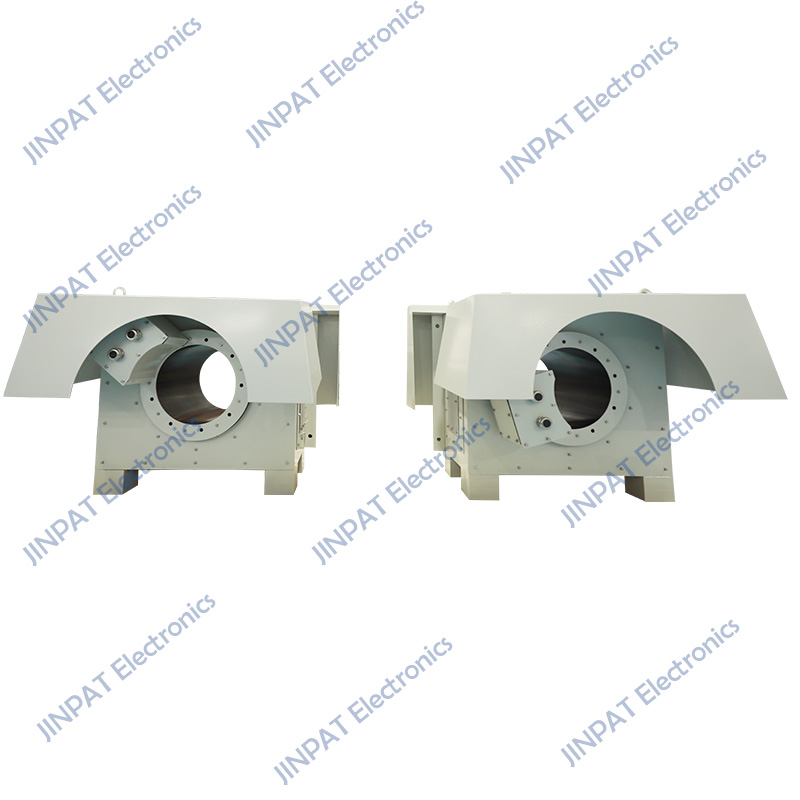
1. Pneumatic & Hollow Shaft Integration (ISO 7 Compatible)
For custom automation, a common requirement is a through bore >0.75" combined with multiple air circuits.
Air Circuits: 2-12 Channels (Compressed air/Vacuum)
Bore Size: 25.4mm (1.0") standard, customizable up to 500mm
Torque: Ultra-low running torque to prevent motor strain
Environment: Validated for ISO 7 Cleanroom standards
2. High Current Heavy-Duty Series
For applications like cable reels or large turntables, power density is the primary concern.
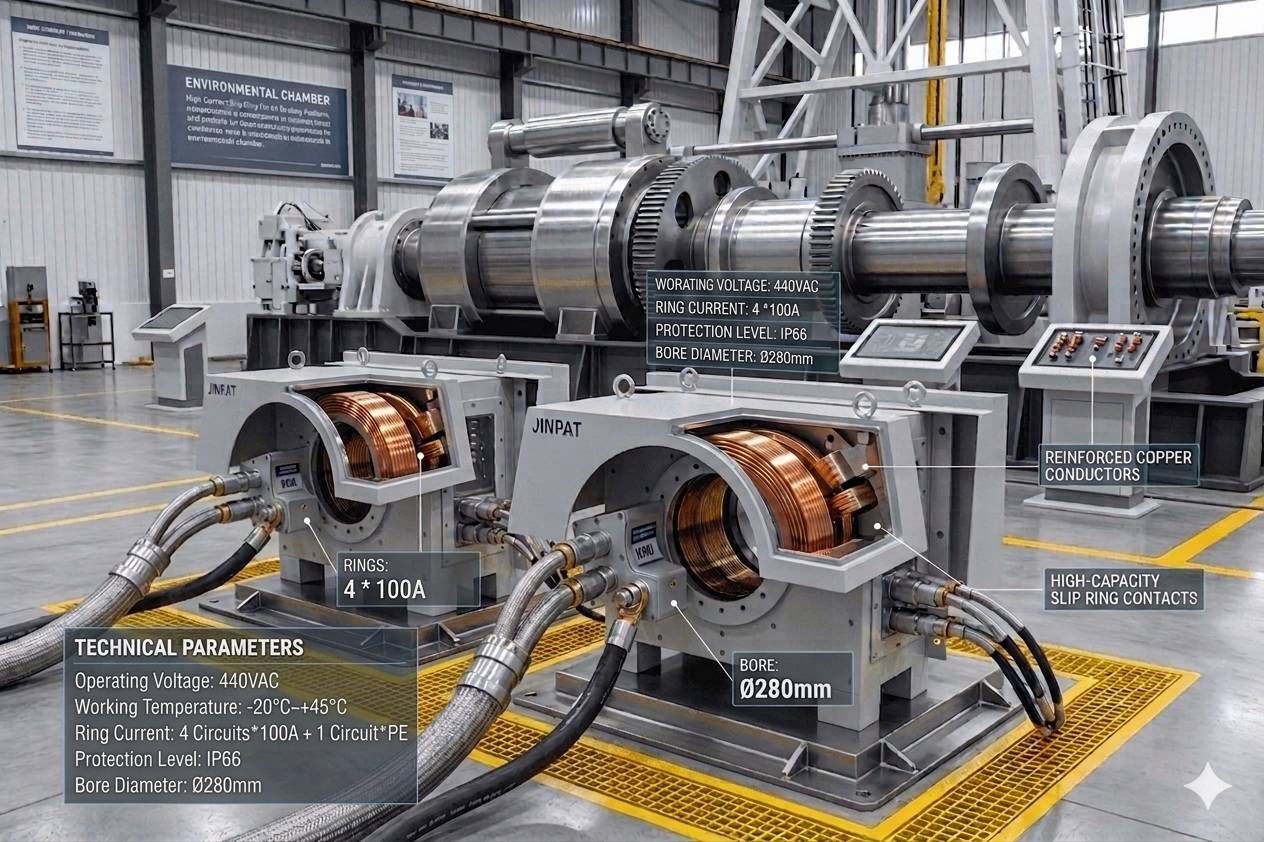
Current Rating: 1 Circuit up to 400A (Continuous)
Voltage: Optimized for 600VAC industrial grids
Through Bore: 32mm (1.25") minimum, providing ample space for central shafts
-
Protection: IP54 rated housing for dust and splash resistance
Solving the "Cleanroom Challenge" in Automation
If you are designing for a semiconductor or medical lab, particle contamination is a project-killer. Most standard rotary unions shed microscopic debris as their seals wear down. Here’s the thing: JINPAT’s cleanroom-series pneumatic rotary unions utilize high-grade stainless steel and specialized PTFE-based seals. This ensures that even at constant operation, the unit meets or exceeds ISO 7 standards.
Furthermore, we’ve noticed that US automation designers often require a minimal running torque. A heavy, high-friction union can cause micro-stutters in precision robotic arms. By optimizing the internal bearing alignment, we provide a smooth, fluid rotation that integrates seamlessly with high-precision servo motors.
Scaling Power: The 400A/600VAC Requirement
On the other side of the spectrum, heavy-duty machinery—such as large-scale cable reels—requires massive power throughput. A common inquiry we receive from the US market is for a single-conductor 400A slip ring with a specific 1.25" through bore.
Why is the bore size so critical? It’s not just about the shaft; it’s about heat dissipation. At 400A, electrical resistance can generate significant heat. A larger internal diameter allows for better airflow and the use of robust, high-mass copper alloy rings. JINPAT’s large-current models are built with silver-graphite brushes, which offer superior conductivity and a much longer service life than standard carbon brushes found in budget alternatives. It actually works out to a lower total cost of ownership (TCO) because you aren't replacing brushes every six months.
Customization and Fast Prototyping
We understand that April and May are often "Evaluation Months" for major US engineering firms. You might have a fixed mechanical structure that only accepts a specific OD/ID ratio, or you might need a sample unit to test fitment before committing to a 200-unit production run.
Whether you are looking at a pancake slip ring for a height-restricted display or a complex integrated gas-electric union, JINPAT’s engineering team specializes in rapid modification. We provide full CAD support and material certifications (RoHS, REACH) to ensure your prototype meets all domestic compliance standards.
Conclusion
The bridge between high-speed data, high-pressure air, and high-amp power is built on precision engineering. By choosing a JINPAT integrated solution, you are not just buying a part; you are securing the uptime of your automation line. From San Francisco labs to Texas industrial sites, our units are proving that "Heavy Duty" and "Cleanroom Compatible" can coexist in the same product catalog.